Tuesday, August 23, 2011
I Love What You Do To Me
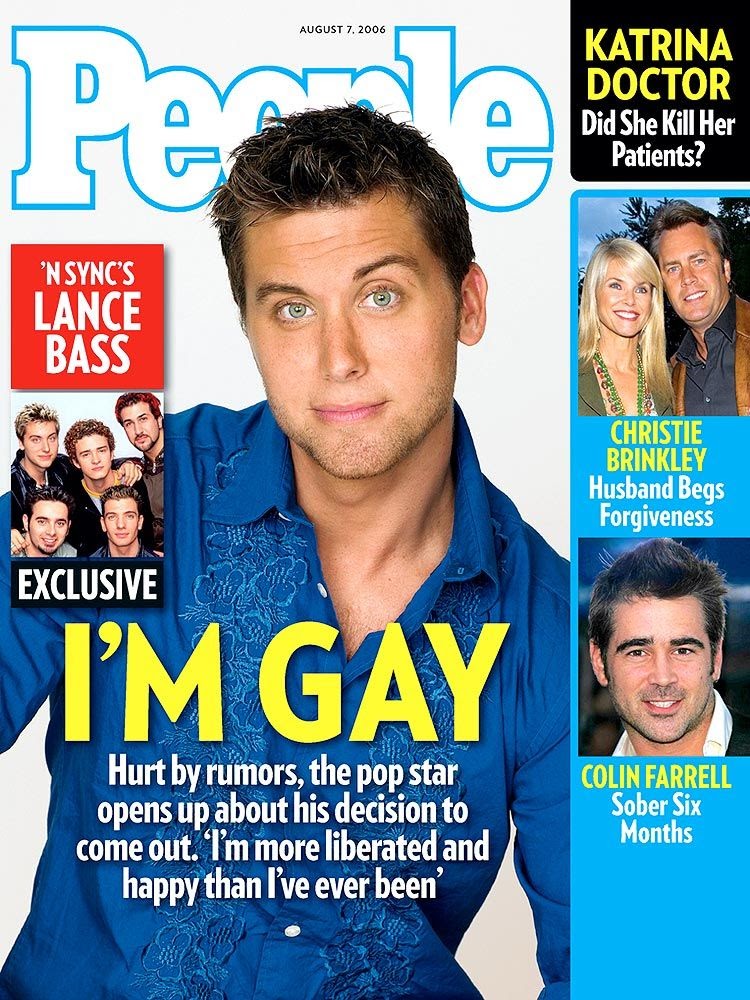
I cherish my interest in beautiful young men. I adore them. I would love to become a photographer so that I could spend my life taking beautiful photographs of them like the one above. I wish I had the skill and talent of a Dutch master so that I could spend my life painting them. I find poetry in every curve of their bodies, in the color of their skin, eyes and hair, and in the timbre of their voices, in the way they laugh and smile, in the way they walk and run, and in the way they stand, sit and lay. I love them. And it doesn’t matter to me if I never find a single one who returns that love, I still love them. And that love fills my life with tenderness, warmth, passion, lust, meaning and purpose. Life would be very dull indeed without that love. I like what I like. I don’t question it. It is a gift to experience those feelings, even if the feelings aren’t returned. I’m sure those I’m not attracted to are worthy, whether they be men I don’t find particularly appealing or women. My lack of sexual and romantic interest in them is not a conscious rejection. Of course it might be easier for me if I found hairy, middle aged chubby guys to be sexy. It would be even easier if I found women sexy. But I like what I like. And if I go to my grave without ever having one of my beauties love me back, I will still appreciate on a deep and profound level my adoration for them.
Friday, August 19, 2011
To the Christianists who would have me pretend I'm someone I'm not
As for all this crap about how people should lead false lives, deny their feelings, try to fit in, and conform to the expectations of others... Soren Kierkegaard described the inability to be one's self as "the sickness unto death." Self-sacrifice is one thing, but if you hide who you really are, then that is dishonest, and healthy relationships are not founded on dishonesty. (Watch Brokeback Mountain if you think LGBT people who made the mistake of marrying the wrong person in their youth should just fake it for the sake of their spouses and children. It doesn't work.) And pretending to be someone you're not is a kind of spiritual death. Q: If you are not who you are, then who are you? A: Nobody.
S.K.'s thinking was a thousand times more profound than these jot and tittle fundamentalists. They interpret the Bible in light of their own prejudices, but because of their insistence that they are only following the literal Word of God, they can not accept that something of themselves exists in their beliefs. In their minds, to disagree with them is to disagree with God. And that is self-serving and prideful.
Socrates, another profound thinker, said, "I know nothing but of my own ignorance."
When I think of all the libraries in the world with all of their books that I will never read, filled with ideas that I'll never even know about much less understand, and how these ideas that are not mine and never will be are dwarfed when compared to the vastness of the universe we live in, it amazes me that there are people in this world who insist that they know the "mind" of God with an absolute certainty and are not at all ashamed to demand--not merely advise or voice their opinion--that others live their lives in a certain way because they speak for God.
S.K.'s thinking was a thousand times more profound than these jot and tittle fundamentalists. They interpret the Bible in light of their own prejudices, but because of their insistence that they are only following the literal Word of God, they can not accept that something of themselves exists in their beliefs. In their minds, to disagree with them is to disagree with God. And that is self-serving and prideful.
Socrates, another profound thinker, said, "I know nothing but of my own ignorance."
When I think of all the libraries in the world with all of their books that I will never read, filled with ideas that I'll never even know about much less understand, and how these ideas that are not mine and never will be are dwarfed when compared to the vastness of the universe we live in, it amazes me that there are people in this world who insist that they know the "mind" of God with an absolute certainty and are not at all ashamed to demand--not merely advise or voice their opinion--that others live their lives in a certain way because they speak for God.
Thursday, August 18, 2011
Here's a comment from an insane I-know-the-mind-of-God Christianist I found on Amazon
"Here is another thought:
"God's intention for marriage was covenant. Gods way of sealing and confirming convenant is through blood. Read your Bible. Blood of the foreskin...(The covenant with Abraham) Blood of Jesus (the new convenant of salvation) AND THEN...the blood of a VIRGIN when she comes together with her husband for the first time. The way God designed a vagina. NOW he did not design an anus this way. There is no blood and covenant God has with homosexuals.
"Another thought on marriage. Marriage was designed as a symbol to show the relation and love between the groom (JESUS) and his bride( the church) We all agree that bride is FEMALE right.
"So how would God be pleased in gay marriage where we represent HIM married to HIMSELF!!
"Comon people! Wake UP AMERICA...and this was all sais in love:)"
_____________
Stupid, hateful people who come up with stupid, hateful ideas, and then they try to shove those ideas down everyone else's throats because they think their sick imaginations are a perfect reflection of "the mind of God."
This person can believe whatever he wants and live however he wants, but I want no part of his disgusting blood lust or his brutal understanding of love. Is this really his religion or is he telling a horror story?
If your god can't appreciate the love of LGBT people, then you can keep your god.
If you can't see the love, beauty, kindness and dignity of LGBT people, then maybe you should put down your ideology and look at them a little harder.
Maybe that disgust you feel for people who are not harming you does not come from godliness. Maybe it comes from your black heart.
Wednesday, August 17, 2011
Tuesday, August 16, 2011
Homophobia and discrimination, what can we do about it?
Coming out is usually very helpful, both for the individual and for LGBTs as a group. Coming out allows people who have been fed a pack of lies about us to see for themselves that we are not the devils we are made out to be. But it’s not a good idea for everyone, especially for those who are still emotionally and financially dependent on unsupportive family members, and those who are still dealing with internalized homophobia or who are particularly vulnerable to the harsh judgment of others. I suspect that a lot of those who seek “ex-gay” therapy were outed before they were ready to defend themselves.
I think it’s also important to keep in mind that we’re not simply dealing with misconceptions that can easily be dispelled. We are under attack from a hate machine that is pumping out incendiary propaganda on a daily basis. Those who built the machine, and those who keep the machine going largely do not care about the truth, or reality or fact. They don’t care if they hurt us either. They have a larger political agenda, and we are merely pawns. A lot of people involved in keeping the hate machine going derive their livelihoods from the hate they spew. Many have their very identities wrapped up in what they’re doing to us. So who will they be and what will they do if they stop hating on us? If those are hard questions to answer, then it’s not likely they’re going to give up the fight anytime soon no matter if beloved family members and friends are in the way.
Ideological thinking is a powerful "drug." Many will simply ignore reality in order to continue to believe they have all the answers. Some people will kill for their ideology. History is full of examples of this. And many of those who are steeped in Christianist ideology will even throw away their own children before they look at the world from a different perspective. The alarming number of LGBT homeless youth is evidence of this.
It used to be that nearly every white family in the South with even a little money, they didn’t have to be rich, had a black maid. These black women often lived with the families they worked for. They cooked and cleaned and they were often the primary caregivers of the children in the house. They were often thought of as family. And of course these women were out, out, out. But still racist attitudes persisted. It took a lot more than whites knowing some black people they liked to change things.
Friday, August 12, 2011
When Christians Lie
Last week “historian” David Barton claimed something rather remarkable on a radio program. He said that the leading pediatric association in America had sent letters to superintendents of nearly all school districts in the country warning them that anti-bullying programs which teach kids to respect LGBT people would cause some to become homosexual. He claimed that, according to this supposedly “leading pediatric association”, such programs planted a kind of gay seed in the minds of young people that could take root and flourish.
Well, it turns out that this “leading pediatric association” Barton referred to is the American College of Pediatricians (ACP), which should not be confused with the American Academy of Pediatrics (AAP). The difference between them is huge. The American Academy of Pediatrics has over 60,000 members. It is, in fact, the leading pediatric association in America. The American College of Pediatricians, on the other hand, has at most a few hundred members. And this group was formed for the purpose of advancing anti-gay Christianist beliefs. It is not the leading pediatric association in America, far from it. And their claims are not scientific but faith based even though they’re packaged in pseudoscientific language. The things they claim about gay people do not hold up to scientific scrutiny. Barton may as well have cited the American Telepathy Syndicate and tried to pass it off as AT&T.
So basically, Barton lied. I’m sure he would claim he didn’t, and that he just has a different opinion as to what the leading pediatric association in America is. And I’m sure many of his devotees would believe him. I, however, am not willing to give him the benefit of the doubt. I have seen the pattern, and not just with David Barton, but with the whole Christianist establishment. They have grown used to lying about us.
Here’s a list of some of their false claims:
--Gay people choose to be gay.
--Homosexuality is caused by a distant and/or hostile father.
--Homosexuality is caused by an overbearing mother.
--Gays were molested by other gays as children, and that turned them gay.
--Kids turn gay when they’re seduced into the lifestyle by gay adults.
--When kids hear about homosexuality in anything other than condemnatory terms, they might be tempted to turn gay.
--Gay kids aren’t bullied.
--More gay kids than straight kids commit suicide because they know being gay is wrong.
--Unhealthy activity engaged in by gay kids is proof that they have chosen or were seduced into a dangerous lifestyle.
--Most gays are promiscuous. Most have hundreds if not thousands of sex partners.
--Gays are far more likely to molest children.
--Gays want to seduce or indoctrinate children so they can increase their numbers.
--Most gays have HIV/AIDS.
--Gays have a shorter lifespan.
--Gays are more violent than straights.
--Gays are responsible for the Nazi Party.
--Gays are really not interested in marriage. They just want to subvert the institution of marriage and destory the family.
--Gays aren’t good parents.
--Gays want to destroy religious liberty and create a totally secular society.
--Gays want to destroy this country.
--Gays hate God.
--Gays can become straight if they want to.
This isn’t an exhaustive list, but you get the idea.
The propaganda war against LGBT people began a long time ago. As soon as LGBT Americans became more visible in our society back in the 1970’s, Christianists--Jerry Falwell and Anita Bryant for example--began to ratchet up their anti-gay rhetoric. From the start, they didn’t rely on strictly Biblical arguments. They used to their advantage the common misconception that gay men seduced teenage boys into being gay. They claimed that LGBT Americans were out to upend the moral foundation of our society and that they were a threat to children.
When the medical establishment began moving away from the idea that homosexuality is a disease and research scientists began to explore the possibility that homosexuality is inborn, it was decided that Bible thumping and the reliance on old myths wouldn’t be enough. So Christianists began to manufacture “evidence”. To the uneducated and to those who want to believe the lies, this “evidence” sounds very convincing, but on closer inspection, the fake scientific arguments fall like a house of cards. The citations of so-called research coming from organizations such as NARTH and ACP and individuals such as George Rekers, Joseph Nicolosi, and Paul Cameron is very telling. NARTH, just as ACP, is not a mainstream organization. Their claims do not hold up to peer review. And men such as Rekers--who has advocate severe punishment for boys deemed effeminate--Nicolosi and Cameron are widely dismissed as kooks by scientists and medical professionals, but Christianists present them in such a manner that you’d think they were Nobel laureates.
When Christianists claim that they know gays can become straight, they do not rely on real science to back up this claim. Instead, they turn to the anecdotal testimony of people like Allen Chambers who has admitted that he’s still attracted to men and to Janet Boynes who has admitted that she was never exclusively lesbian.
And Christianists aren’t above manipulating and misrepresenting data from scientists doing legitimate research. For example, Sen. Al Franken recently caught Focus On The Family’s Thomas Minnery misrepresenting the facts on Capital Hill about gay parents.
Our society has underwent a paradigm shift in the last one hundred and fifty years. Women began demanding the right to vote, there was a relaxation of gender roles, and the concept of sexual orientation was introduced. The shift kicked into high gear in the 1960’s with the marketing of effective birth control, the Sexual Revolution, the modern Women’s Rights Movement and the Gay Rights Movement. How we as a society viewed sex, sexuality and gender roles changed rapidly. But the dissemination of accurate information didn’t always keep pace with changing times. Some caught on to the concept of sexual orientation quicker than others. And even now some older people may be honestly confused. But, in my opinion, younger people--say those under 50--who are still holding onto their homophobia don’t want to know the truth.
Christianists have decided to draw the line in the sand at homosexuality. Divorce, premarital sex, babies born to unwed mothers, sex and nudity in movies, magazines and on the internet, women refusing to be obedient to husbands, women earning their own money, unmarried couples living together, mixed marriages--both in terms of race and religion--are all common now. These things are generally viewed as simply being inescapable facts of life even by many of those who disapprove. But there are still enough bigots out there willing to think the worst of LGBT people to make scapegoating the gays profitable and politically advantageous.
So what are we to make of these Christian extremists, these Christianists who are spreading the lies? I think that our society has a tendency to let people slide if their unusual or unfounded beliefs are based on their faith. In many respects, this is a good thing. But the Christianists are hurting people. They are engaged in a sustained, deliberate, orchestrated, decades-long attack on LGBT people that has not only slowed the advance of LGBT rights, but the attacks have lead directly to instances of depression, suicide and homelessness among our youth. Most, Christian and non-Christian, view vicious and hurtful lies with disdain. Of course few of us are above telling lies. Many of us even occasionally tell vicious lies with the intention of hurting those we don’t like. But the Christianists have constructed a hate machine designed to pump out lies and distortions on a daily basis, and the machine has been in full swing for years. So I think it’s time we stop letting Christianists off the hook simply because they claim their ideas about homosexuality and gender stem from their religion. Even by the standards of their own religion, Christianists are involved in something that is despicable. They may claim to be Christian, they may claim to be righteous, but a lie is a lie.
Well, it turns out that this “leading pediatric association” Barton referred to is the American College of Pediatricians (ACP), which should not be confused with the American Academy of Pediatrics (AAP). The difference between them is huge. The American Academy of Pediatrics has over 60,000 members. It is, in fact, the leading pediatric association in America. The American College of Pediatricians, on the other hand, has at most a few hundred members. And this group was formed for the purpose of advancing anti-gay Christianist beliefs. It is not the leading pediatric association in America, far from it. And their claims are not scientific but faith based even though they’re packaged in pseudoscientific language. The things they claim about gay people do not hold up to scientific scrutiny. Barton may as well have cited the American Telepathy Syndicate and tried to pass it off as AT&T.
So basically, Barton lied. I’m sure he would claim he didn’t, and that he just has a different opinion as to what the leading pediatric association in America is. And I’m sure many of his devotees would believe him. I, however, am not willing to give him the benefit of the doubt. I have seen the pattern, and not just with David Barton, but with the whole Christianist establishment. They have grown used to lying about us.
Here’s a list of some of their false claims:
--Gay people choose to be gay.
--Homosexuality is caused by a distant and/or hostile father.
--Homosexuality is caused by an overbearing mother.
--Gays were molested by other gays as children, and that turned them gay.
--Kids turn gay when they’re seduced into the lifestyle by gay adults.
--When kids hear about homosexuality in anything other than condemnatory terms, they might be tempted to turn gay.
--Gay kids aren’t bullied.
--More gay kids than straight kids commit suicide because they know being gay is wrong.
--Unhealthy activity engaged in by gay kids is proof that they have chosen or were seduced into a dangerous lifestyle.
--Most gays are promiscuous. Most have hundreds if not thousands of sex partners.
--Gays are far more likely to molest children.
--Gays want to seduce or indoctrinate children so they can increase their numbers.
--Most gays have HIV/AIDS.
--Gays have a shorter lifespan.
--Gays are more violent than straights.
--Gays are responsible for the Nazi Party.
--Gays are really not interested in marriage. They just want to subvert the institution of marriage and destory the family.
--Gays aren’t good parents.
--Gays want to destroy religious liberty and create a totally secular society.
--Gays want to destroy this country.
--Gays hate God.
--Gays can become straight if they want to.
This isn’t an exhaustive list, but you get the idea.
The propaganda war against LGBT people began a long time ago. As soon as LGBT Americans became more visible in our society back in the 1970’s, Christianists--Jerry Falwell and Anita Bryant for example--began to ratchet up their anti-gay rhetoric. From the start, they didn’t rely on strictly Biblical arguments. They used to their advantage the common misconception that gay men seduced teenage boys into being gay. They claimed that LGBT Americans were out to upend the moral foundation of our society and that they were a threat to children.
When the medical establishment began moving away from the idea that homosexuality is a disease and research scientists began to explore the possibility that homosexuality is inborn, it was decided that Bible thumping and the reliance on old myths wouldn’t be enough. So Christianists began to manufacture “evidence”. To the uneducated and to those who want to believe the lies, this “evidence” sounds very convincing, but on closer inspection, the fake scientific arguments fall like a house of cards. The citations of so-called research coming from organizations such as NARTH and ACP and individuals such as George Rekers, Joseph Nicolosi, and Paul Cameron is very telling. NARTH, just as ACP, is not a mainstream organization. Their claims do not hold up to peer review. And men such as Rekers--who has advocate severe punishment for boys deemed effeminate--Nicolosi and Cameron are widely dismissed as kooks by scientists and medical professionals, but Christianists present them in such a manner that you’d think they were Nobel laureates.
When Christianists claim that they know gays can become straight, they do not rely on real science to back up this claim. Instead, they turn to the anecdotal testimony of people like Allen Chambers who has admitted that he’s still attracted to men and to Janet Boynes who has admitted that she was never exclusively lesbian.
And Christianists aren’t above manipulating and misrepresenting data from scientists doing legitimate research. For example, Sen. Al Franken recently caught Focus On The Family’s Thomas Minnery misrepresenting the facts on Capital Hill about gay parents.
Our society has underwent a paradigm shift in the last one hundred and fifty years. Women began demanding the right to vote, there was a relaxation of gender roles, and the concept of sexual orientation was introduced. The shift kicked into high gear in the 1960’s with the marketing of effective birth control, the Sexual Revolution, the modern Women’s Rights Movement and the Gay Rights Movement. How we as a society viewed sex, sexuality and gender roles changed rapidly. But the dissemination of accurate information didn’t always keep pace with changing times. Some caught on to the concept of sexual orientation quicker than others. And even now some older people may be honestly confused. But, in my opinion, younger people--say those under 50--who are still holding onto their homophobia don’t want to know the truth.
Christianists have decided to draw the line in the sand at homosexuality. Divorce, premarital sex, babies born to unwed mothers, sex and nudity in movies, magazines and on the internet, women refusing to be obedient to husbands, women earning their own money, unmarried couples living together, mixed marriages--both in terms of race and religion--are all common now. These things are generally viewed as simply being inescapable facts of life even by many of those who disapprove. But there are still enough bigots out there willing to think the worst of LGBT people to make scapegoating the gays profitable and politically advantageous.
So what are we to make of these Christian extremists, these Christianists who are spreading the lies? I think that our society has a tendency to let people slide if their unusual or unfounded beliefs are based on their faith. In many respects, this is a good thing. But the Christianists are hurting people. They are engaged in a sustained, deliberate, orchestrated, decades-long attack on LGBT people that has not only slowed the advance of LGBT rights, but the attacks have lead directly to instances of depression, suicide and homelessness among our youth. Most, Christian and non-Christian, view vicious and hurtful lies with disdain. Of course few of us are above telling lies. Many of us even occasionally tell vicious lies with the intention of hurting those we don’t like. But the Christianists have constructed a hate machine designed to pump out lies and distortions on a daily basis, and the machine has been in full swing for years. So I think it’s time we stop letting Christianists off the hook simply because they claim their ideas about homosexuality and gender stem from their religion. Even by the standards of their own religion, Christianists are involved in something that is despicable. They may claim to be Christian, they may claim to be righteous, but a lie is a lie.
Tuesday, August 2, 2011
Late For The Party--Chapter One
by Gary Cottle
At forty-one, no one had ever told me they loved me, not in a romantic sense at least. Sure I had heard my mother say it, various other relatives, friends, but no boyfriend had ever looked at me and said, “Gary, I love you.” Most of the time I tried to believe that I was, in fact, lovable. I sometimes told myself I was merely unlucky in finding the right guy, but that wasn’t really true.
It’s probably fair to say I did everything I could to make sure there was no love in my life. I steered away from making those connections that might lead in that direction, for I was, and am, terribly shy, morbidly shy. In fact the word “shy” just isn’t serious enough to connote my intense feelings of awkwardness, and my propensity to avoid meeting new people. Full on social phobia is the thing that kept me from having what others might term a “real life.” But I had managed to make do despite my affliction. I took care of the house I shared with my father--cooked, cleaned, mowed the grass. I had my books. I rented DVDs regularly from Blockbuster. I had my writing. And I had my internet friends. I was grateful for my quiet little life, and at forty-one, I was more happy, more satisfied than I had ever been. I had spent my youth in a state of suicidal depression. Psychotropic drugs, appointments with psychiatrists, and vacations in hospitals were the mainstays of my twenties, but I had survived by settling into an existence that was tailored down to fit my limitations.
However, self-doubt, regret and loneliness were always there just below the monastic simplicity. For several years I had lived in relative contentment and peace, but the truce I had made with the demons of my younger self was fragile, and I knew from the beginning that this period of muted comfort would be short-lived.
May 14, 2007 was the day I was told my father was going to die. The news was very grim, but I was, more or less, prepared for it. It was almost a relief to look at the situation directly and admit the obvious. The doctors had been telling me Dad would eventually return to our home in Fayetteville, West Virginia. They pretended he was going to get better, and for a while, I pretended to believe them. My father had been sick for years. He had his first heart attack in January of 1986, and there had been quite a number of close calls after that, but he had always managed to hang on and bounce back. However, he turned a corner the summer before he died. He became very tired. He stopped eating. He lost interest in nearly everything. He didn’t want to talk on the phone. He didn’t want to see friends or family. He stopped smiling. He lost nearly all traces of his legendary sense of humor.
For quite a few months, I assumed he was depressed, and I thought the lack of exercise and lack of proper nutrition was making him listless. But sometime after the new year, the truth began to settle in. I realized that part of him was already gone, and I knew he wasn’t going to snap out of it. Right there in front of me, my dad was slowly packing it in. He spent most of his time sitting on the sofa staring blankly at the television, and he stopped looking at me or saying anything when I walked by him. When I spoke to him, his expression would remain blank and I generally got monosyllabic responses. His life was over. We were just waiting for his heart to stop.
When I got home from the hospital on May 14, I was thankful our small ranch house was quiet and still. Even though I was alone in the house, I retreated to my room. It had been my refuge for seven years, and I needed to feel I was in my safe place so I could let the news sink in. I had seen one of my father’s doctors while at the hospital, and he had confirmed my father’s prognosis was poor. Dad was going to die, maybe in a matter of days, perhaps hours. I turned the air conditioner on in the window above my bed and let the chilly air wash over me and the mechanical buzz drown out all distractions. For a long while I thought of nothing other than the fact my father was never coming home again and that everything was about to change.
Eventually I decided I was hungry and ate a modest dinner, and while eating, a feeling of urgency came to me. I had to do something. I had to finish a certain project before I could face what was about to happen to Dad. I needed to plant my vegetable garden. It was already getting late, and it would soon be dark, but I pressed ahead. I changed into my work clothes, locked the front door and went out the back.
Planting a vegetable garden had become a yearly ritual. The idea first struck me soon after we moved into our house on Maple Avenue back in 2000. There was enough space in the backyard, and I had by then already developed an interest in gardening. Dad discouraged me as he usually did. He warned that the soil wasn’t rich enough. He said that the backyard was probably too rocky. He claimed that simply planting a garden would be backbreaking work, and then I would have to go to the trouble of watering and weeding it all summer. He was always like this. Any time I expressed an interest in something new, Dad would do his best to hold me back, always, from the time I was a small child.
I don’t think he meant to crush my spirit. I think he was truly afraid I would be disappointed or hurt. He was one of those people who was always keenly aware of the pitfalls. He was a bit of a Chicken Little. Life had burned him a few times, and I guess he wanted to spare me, but hearing all those admonishments--admonishments that seemed to be coupled with a lack of belief in my abilities--for decades was disheartening. Even though I tried to resist his negativity, a large portion of his pessimism seeped in, and on top of that, my self-esteem was left in tatters. I became a reticent, reluctant person. My gut instincts resembled that of Macon Leary’s, the accidental tourist, and like Macon, I learned the hard way that you will end up getting hurt anyway even if you’re careful not to take risks. There is a price to be paid for shunning the various calls to adventure that come your way. If you play the game, you may lose, but you sure can’t win by sitting it out.
Even though I grew up to be way too cautious and reluctant, by the time the ambition to plant a vegetable garden came over me, I had determined that I could ignore Dad’s dour attitude if I wanted--sometimes anyway, if I gave it everything I could--so I went ahead and tried my hand at raising a vegetable garden the summer we moved into our little ranch house on Maple Avenue. I was not in the best of health even though I was still a fairly young man then, but I wasn’t planning on plowing up forty acres. The lower part of the backyard was often soggy and wet, and several large shade trees down there blocked the sun. There was a small, one-car garage on one side of the lot, and the gas line went straight up the middle of the backyard. That left me with a 15x15 foot plot to work with. My vegetable garden would be about as big as a modest sized living room or a good sized bedroom. It was a manageable project, and I made a go of it. I grew several varieties of heirloom tomatoes--including Mr. Stripes--bell peppers, banana peppers, crookneck squash, a couple of rows of Silver Queen corn and Blue Lake green beans. I even grew a few cantaloupes and watermelons.
The vegetable garden was a success from the start. My efforts, just as my efforts to raise flowers, gave me a tremendous sense of accomplishment, and this was something that had been lacking in my life. The vegetables and the beautiful flowers provided a sense of optimism. I came to know, in a deep and real sense, certain things did pay off if you planned ahead and worked steadily and faithfully toward your goal. It was a marvelous renunciation of an abiding odious belief that I didn’t have it in me to achieve anything worthwhile.
I regularly spent hours working in the yard during the summer months. The work made my body stronger and I felt more fit than I had in my whole life. And because I was working with plants and using my muscles, I felt alive and part of nature. I learned to rejoice in feeling exhausted. I did what I had to do. Then I slumped lazily onto my garden bench which sat on a small porch along the side of the garage. I could survey the back yard while sitting on the bench, smell the freshly cut grass, look at the old maple trees, watch birds. And my vegetable garden was right there in front of me. The summer air was always warm and humid. It covered me like a blanket. I could hear lawn mowers in the distance buzzing, dogs barking, and the wisps of conversations coming from neighbors’ kitchens. Everything seemed right with the world when I sat there on that bench and recovered from my toils.
By the first of July, I would have green tomatoes large enough to fry, a delicious treat, and then the tomatoes would ripen and other things would be ready to harvest and eat. Having fresh vegetables daily for several weeks in summer was like a celebration, and it just so happened that Dad enjoyed the vegetables more than I did. He was a West Virginia country boy, and back in the ‘30s, ‘40s and ‘50s, back when he was young, almost everybody who lived in the country grew vegetables. Grocery stores were much smaller back then, and most people were poor and they didn’t have the money to buy a lot of stuff from the store anyway, so of course they grew many of their own vegetables. Dad had grown accustomed to farm fresh tomatoes, cucumbers, green onions… So he missed them, and when I started bringing in goodies from our backyard, it was like I had restored a cherished part of his past he thought was gone for good. He would often go out into the garden and check on the progress of various individual vegetables, and he would beam with appreciation when it was time to pick them and eat them. Much to my surprise, I had managed to do something, at long last, that made my father proud of me.
Everything was all set the evening of May 14, 2007. I had already scrapped away the sod and loosened the soil with a maddock that had been part of my father’s tool collection since I was a child. This was the backbreaking work my father told me about. But each year I managed to get it done. I had already mixed in 10-10-10 fertilizer and several bags of humus. And a couple of days prior, I had a neighbor take me to Southern States and a couple of local nurseries so I could buy seeds and seedlings. Now I had to dig the holes using my small spade and drop my babies into place. This meant I had to crawl along on my knees for a few hours, a task not quite as labor intensive as the sod removal with the maddock, but it wasn’t easy, and I was already tired. But I went on with it. I worked without taking any breaks. The sun soon went down and the only light I had came from the sconce by the backdoor, but I kept at it. When I was finished, I was exhausted, my knees ached, and I was covered in dirt. But my garden was planted. I was glad I had managed to get that chore done, but I was also sad. I was consciously aware of the fact that this would be the last time I would plant a vegetable garden at our house on Maple Avenue. In a sense, I came of age in that house even though I hadn’t moved into it until I was in my thirties. While living there, I found out that I was capable, I could do things, at least certain things, and I felt useful for the first time in my life. But my time there was about to end, and I was all too aware of this.
It was about eleven o’clock when I limped back into the house. I was thirsty, I needed to pee, and of course I needed to shower. But I immediately noticed that the answering machine was flashing in the darkened living room. I hit play and heard someone who identify herself as my father’s nurse ask me to call her back as soon as possible. So I picked up the receiver, punched in the number and asked to speak to the woman who had called me. When she came on the line, she informed me that my father was having difficulty breathing and that I needed to return to the hospital at once.
At forty-one, no one had ever told me they loved me, not in a romantic sense at least. Sure I had heard my mother say it, various other relatives, friends, but no boyfriend had ever looked at me and said, “Gary, I love you.” Most of the time I tried to believe that I was, in fact, lovable. I sometimes told myself I was merely unlucky in finding the right guy, but that wasn’t really true.
It’s probably fair to say I did everything I could to make sure there was no love in my life. I steered away from making those connections that might lead in that direction, for I was, and am, terribly shy, morbidly shy. In fact the word “shy” just isn’t serious enough to connote my intense feelings of awkwardness, and my propensity to avoid meeting new people. Full on social phobia is the thing that kept me from having what others might term a “real life.” But I had managed to make do despite my affliction. I took care of the house I shared with my father--cooked, cleaned, mowed the grass. I had my books. I rented DVDs regularly from Blockbuster. I had my writing. And I had my internet friends. I was grateful for my quiet little life, and at forty-one, I was more happy, more satisfied than I had ever been. I had spent my youth in a state of suicidal depression. Psychotropic drugs, appointments with psychiatrists, and vacations in hospitals were the mainstays of my twenties, but I had survived by settling into an existence that was tailored down to fit my limitations.
However, self-doubt, regret and loneliness were always there just below the monastic simplicity. For several years I had lived in relative contentment and peace, but the truce I had made with the demons of my younger self was fragile, and I knew from the beginning that this period of muted comfort would be short-lived.
May 14, 2007 was the day I was told my father was going to die. The news was very grim, but I was, more or less, prepared for it. It was almost a relief to look at the situation directly and admit the obvious. The doctors had been telling me Dad would eventually return to our home in Fayetteville, West Virginia. They pretended he was going to get better, and for a while, I pretended to believe them. My father had been sick for years. He had his first heart attack in January of 1986, and there had been quite a number of close calls after that, but he had always managed to hang on and bounce back. However, he turned a corner the summer before he died. He became very tired. He stopped eating. He lost interest in nearly everything. He didn’t want to talk on the phone. He didn’t want to see friends or family. He stopped smiling. He lost nearly all traces of his legendary sense of humor.
For quite a few months, I assumed he was depressed, and I thought the lack of exercise and lack of proper nutrition was making him listless. But sometime after the new year, the truth began to settle in. I realized that part of him was already gone, and I knew he wasn’t going to snap out of it. Right there in front of me, my dad was slowly packing it in. He spent most of his time sitting on the sofa staring blankly at the television, and he stopped looking at me or saying anything when I walked by him. When I spoke to him, his expression would remain blank and I generally got monosyllabic responses. His life was over. We were just waiting for his heart to stop.
When I got home from the hospital on May 14, I was thankful our small ranch house was quiet and still. Even though I was alone in the house, I retreated to my room. It had been my refuge for seven years, and I needed to feel I was in my safe place so I could let the news sink in. I had seen one of my father’s doctors while at the hospital, and he had confirmed my father’s prognosis was poor. Dad was going to die, maybe in a matter of days, perhaps hours. I turned the air conditioner on in the window above my bed and let the chilly air wash over me and the mechanical buzz drown out all distractions. For a long while I thought of nothing other than the fact my father was never coming home again and that everything was about to change.
Eventually I decided I was hungry and ate a modest dinner, and while eating, a feeling of urgency came to me. I had to do something. I had to finish a certain project before I could face what was about to happen to Dad. I needed to plant my vegetable garden. It was already getting late, and it would soon be dark, but I pressed ahead. I changed into my work clothes, locked the front door and went out the back.
Planting a vegetable garden had become a yearly ritual. The idea first struck me soon after we moved into our house on Maple Avenue back in 2000. There was enough space in the backyard, and I had by then already developed an interest in gardening. Dad discouraged me as he usually did. He warned that the soil wasn’t rich enough. He said that the backyard was probably too rocky. He claimed that simply planting a garden would be backbreaking work, and then I would have to go to the trouble of watering and weeding it all summer. He was always like this. Any time I expressed an interest in something new, Dad would do his best to hold me back, always, from the time I was a small child.
I don’t think he meant to crush my spirit. I think he was truly afraid I would be disappointed or hurt. He was one of those people who was always keenly aware of the pitfalls. He was a bit of a Chicken Little. Life had burned him a few times, and I guess he wanted to spare me, but hearing all those admonishments--admonishments that seemed to be coupled with a lack of belief in my abilities--for decades was disheartening. Even though I tried to resist his negativity, a large portion of his pessimism seeped in, and on top of that, my self-esteem was left in tatters. I became a reticent, reluctant person. My gut instincts resembled that of Macon Leary’s, the accidental tourist, and like Macon, I learned the hard way that you will end up getting hurt anyway even if you’re careful not to take risks. There is a price to be paid for shunning the various calls to adventure that come your way. If you play the game, you may lose, but you sure can’t win by sitting it out.
Even though I grew up to be way too cautious and reluctant, by the time the ambition to plant a vegetable garden came over me, I had determined that I could ignore Dad’s dour attitude if I wanted--sometimes anyway, if I gave it everything I could--so I went ahead and tried my hand at raising a vegetable garden the summer we moved into our little ranch house on Maple Avenue. I was not in the best of health even though I was still a fairly young man then, but I wasn’t planning on plowing up forty acres. The lower part of the backyard was often soggy and wet, and several large shade trees down there blocked the sun. There was a small, one-car garage on one side of the lot, and the gas line went straight up the middle of the backyard. That left me with a 15x15 foot plot to work with. My vegetable garden would be about as big as a modest sized living room or a good sized bedroom. It was a manageable project, and I made a go of it. I grew several varieties of heirloom tomatoes--including Mr. Stripes--bell peppers, banana peppers, crookneck squash, a couple of rows of Silver Queen corn and Blue Lake green beans. I even grew a few cantaloupes and watermelons.
The vegetable garden was a success from the start. My efforts, just as my efforts to raise flowers, gave me a tremendous sense of accomplishment, and this was something that had been lacking in my life. The vegetables and the beautiful flowers provided a sense of optimism. I came to know, in a deep and real sense, certain things did pay off if you planned ahead and worked steadily and faithfully toward your goal. It was a marvelous renunciation of an abiding odious belief that I didn’t have it in me to achieve anything worthwhile.
I regularly spent hours working in the yard during the summer months. The work made my body stronger and I felt more fit than I had in my whole life. And because I was working with plants and using my muscles, I felt alive and part of nature. I learned to rejoice in feeling exhausted. I did what I had to do. Then I slumped lazily onto my garden bench which sat on a small porch along the side of the garage. I could survey the back yard while sitting on the bench, smell the freshly cut grass, look at the old maple trees, watch birds. And my vegetable garden was right there in front of me. The summer air was always warm and humid. It covered me like a blanket. I could hear lawn mowers in the distance buzzing, dogs barking, and the wisps of conversations coming from neighbors’ kitchens. Everything seemed right with the world when I sat there on that bench and recovered from my toils.
By the first of July, I would have green tomatoes large enough to fry, a delicious treat, and then the tomatoes would ripen and other things would be ready to harvest and eat. Having fresh vegetables daily for several weeks in summer was like a celebration, and it just so happened that Dad enjoyed the vegetables more than I did. He was a West Virginia country boy, and back in the ‘30s, ‘40s and ‘50s, back when he was young, almost everybody who lived in the country grew vegetables. Grocery stores were much smaller back then, and most people were poor and they didn’t have the money to buy a lot of stuff from the store anyway, so of course they grew many of their own vegetables. Dad had grown accustomed to farm fresh tomatoes, cucumbers, green onions… So he missed them, and when I started bringing in goodies from our backyard, it was like I had restored a cherished part of his past he thought was gone for good. He would often go out into the garden and check on the progress of various individual vegetables, and he would beam with appreciation when it was time to pick them and eat them. Much to my surprise, I had managed to do something, at long last, that made my father proud of me.
Everything was all set the evening of May 14, 2007. I had already scrapped away the sod and loosened the soil with a maddock that had been part of my father’s tool collection since I was a child. This was the backbreaking work my father told me about. But each year I managed to get it done. I had already mixed in 10-10-10 fertilizer and several bags of humus. And a couple of days prior, I had a neighbor take me to Southern States and a couple of local nurseries so I could buy seeds and seedlings. Now I had to dig the holes using my small spade and drop my babies into place. This meant I had to crawl along on my knees for a few hours, a task not quite as labor intensive as the sod removal with the maddock, but it wasn’t easy, and I was already tired. But I went on with it. I worked without taking any breaks. The sun soon went down and the only light I had came from the sconce by the backdoor, but I kept at it. When I was finished, I was exhausted, my knees ached, and I was covered in dirt. But my garden was planted. I was glad I had managed to get that chore done, but I was also sad. I was consciously aware of the fact that this would be the last time I would plant a vegetable garden at our house on Maple Avenue. In a sense, I came of age in that house even though I hadn’t moved into it until I was in my thirties. While living there, I found out that I was capable, I could do things, at least certain things, and I felt useful for the first time in my life. But my time there was about to end, and I was all too aware of this.
It was about eleven o’clock when I limped back into the house. I was thirsty, I needed to pee, and of course I needed to shower. But I immediately noticed that the answering machine was flashing in the darkened living room. I hit play and heard someone who identify herself as my father’s nurse ask me to call her back as soon as possible. So I picked up the receiver, punched in the number and asked to speak to the woman who had called me. When she came on the line, she informed me that my father was having difficulty breathing and that I needed to return to the hospital at once.
Subscribe to:
Posts (Atom)